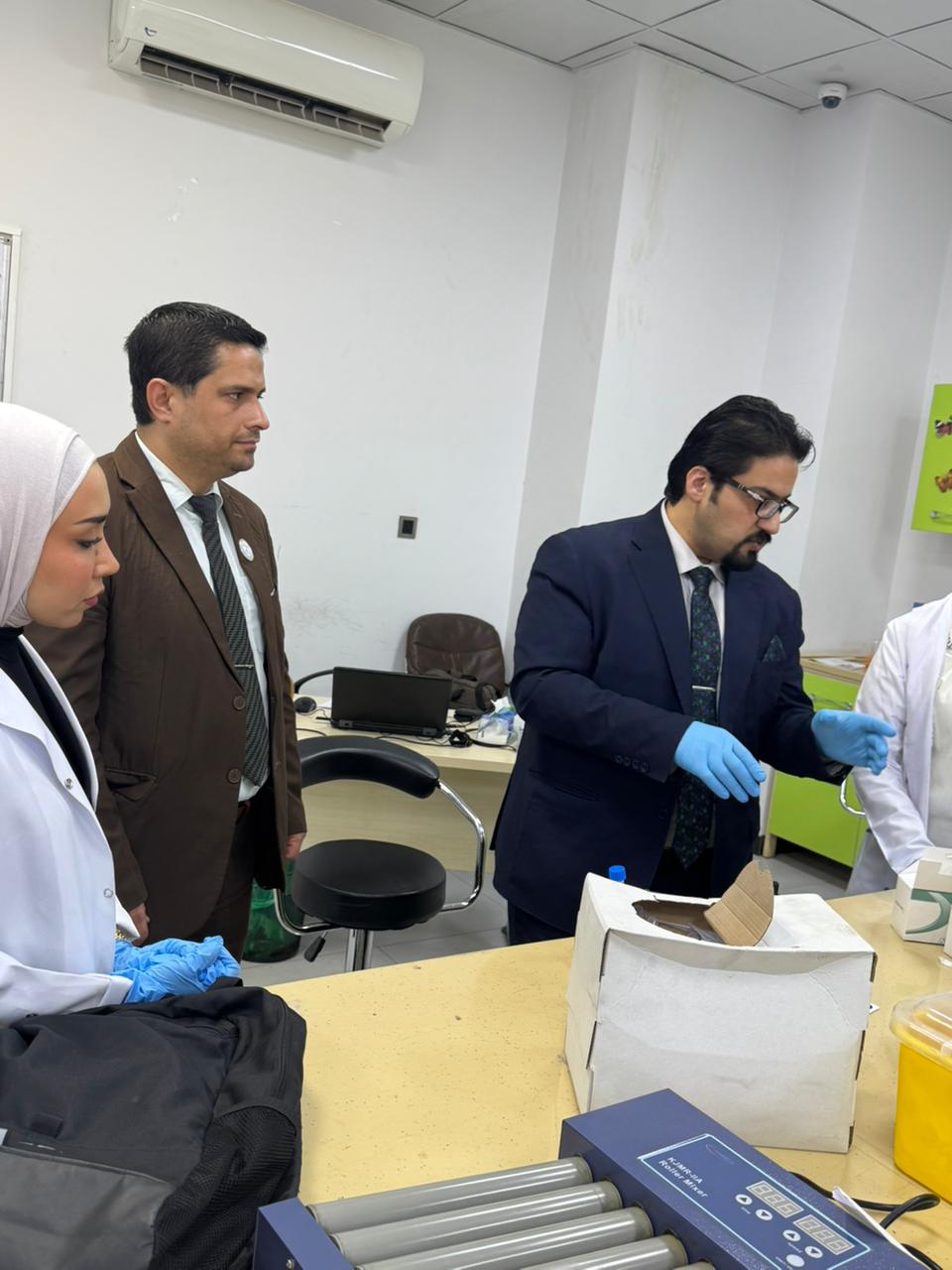
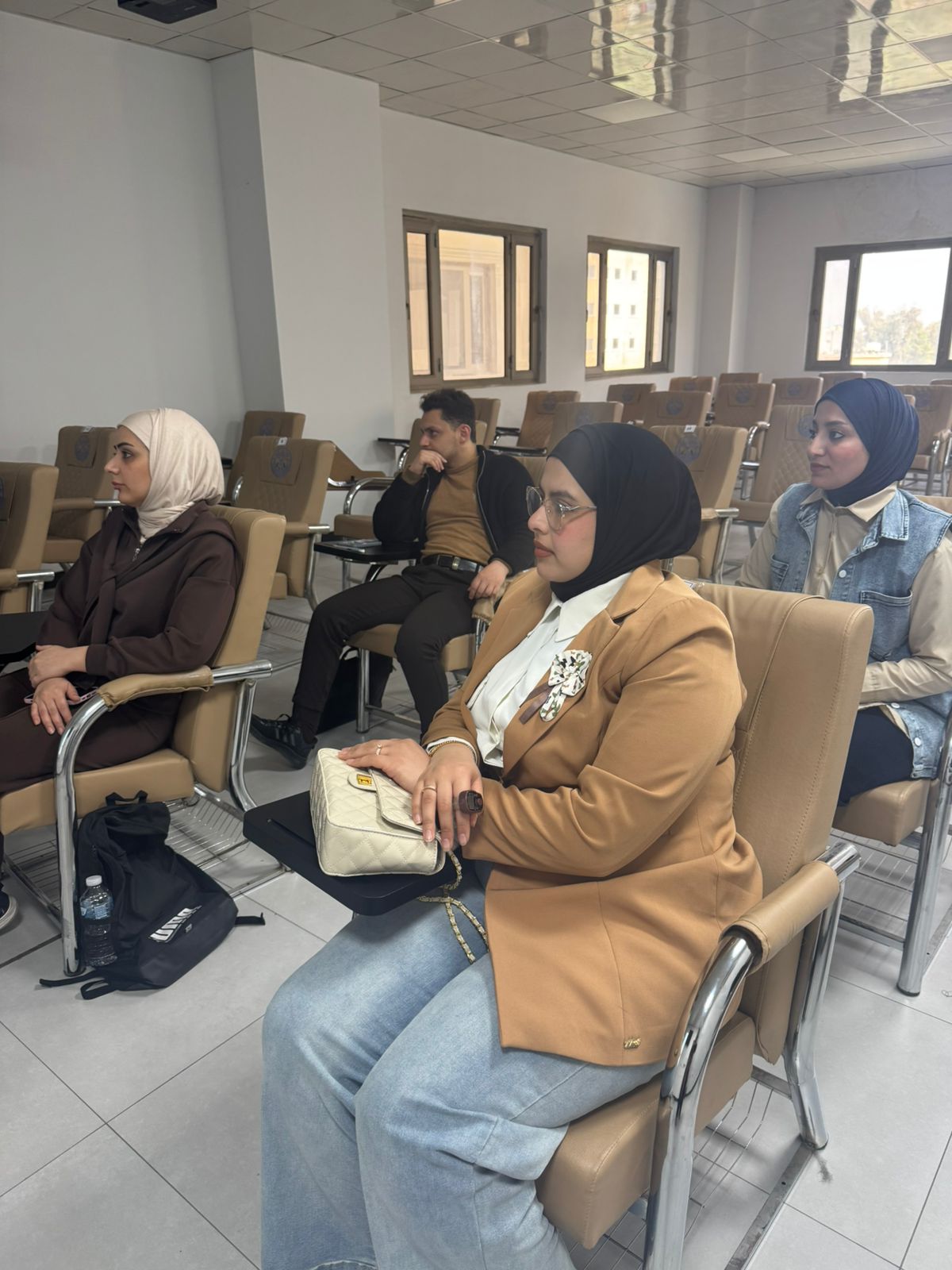
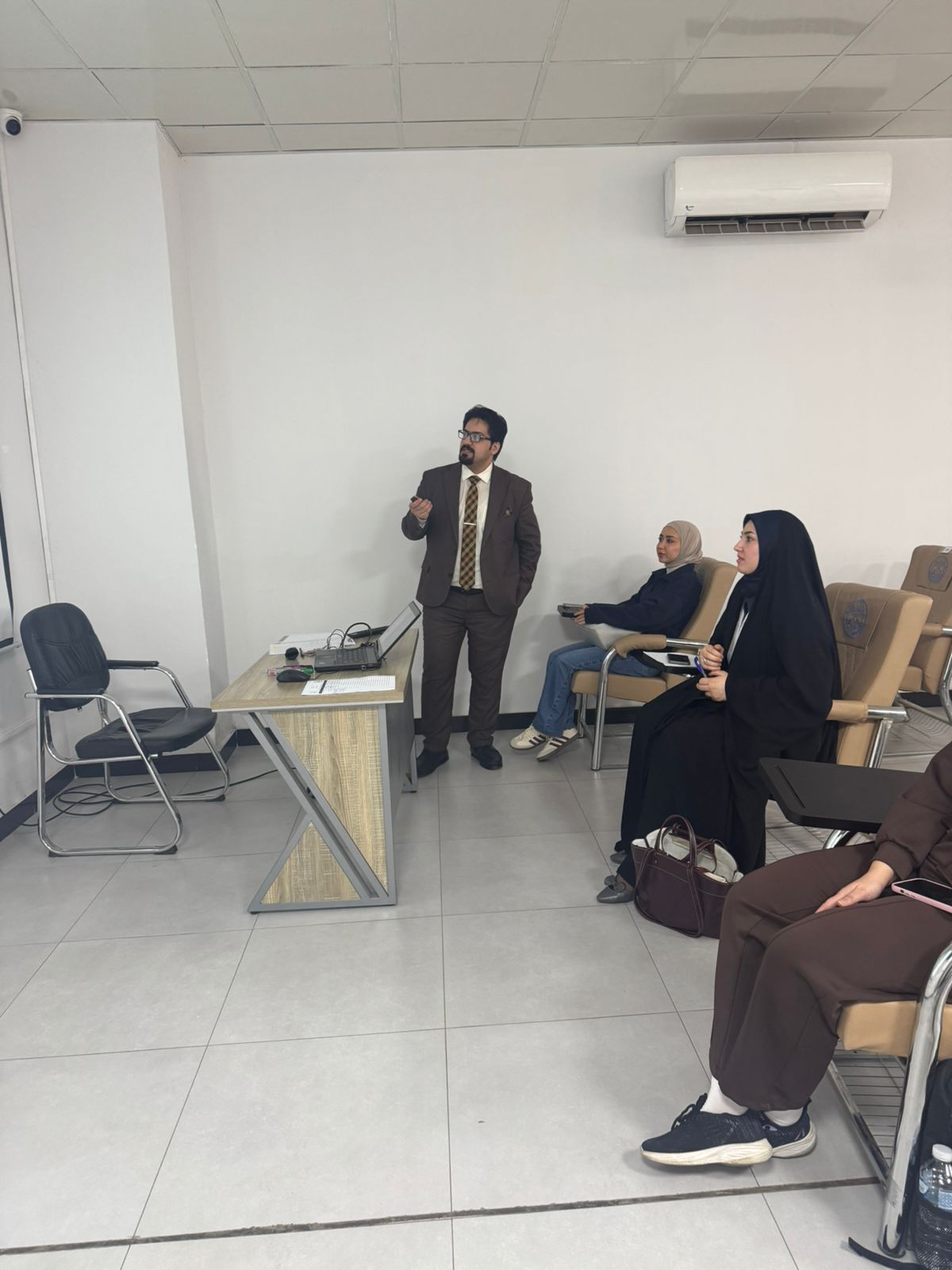
Within the courses of the Continuing Education Unit at the College of Health and Medical Techniques, the college organized a training course on the importance of microbes and autoimmune diseases, in which each of the following lectured.assistant Prof. Dr. Abbas Attia Hamoudi, lecturer.Dr.Maitham Jabouri Abdul Hussein, and Dr.Ali Saad Kadhim
The course deals with the role of microbes in triggering autoimmune diseases through immunological mechanisms such as molecular mimicry and superantigens, highlighting the ability of Salmonella to provoke abnormal immune reactions. It also reviews bacteria capable of stimulating autoimmune disorders and, in particular, their role in reactive arthritis. The course focuses on explaining the relationship between infection, the appearance of reactive arthritis and the development of symptoms after injury. It also includes hands-on training in laboratory immunodiagnostics using serological tests such as the Widal test to differentiate between active infections and autoimmune responses. The course concludes with enhancing the skills of interpreting the results of laboratory tests related to infections and immune disorders, especially those related to Salmonella and the results of the Widal test.
One of the most important outputs of the course:
1-clarifying the role of microbes in stimulating autoimmune diseases
This is done by explaining immunological mechanisms such as molecular mimicry, superantigens, and how microbes such as Salmonella can provoke autoimmune reactions.
2-identify the bacteria that trigger autoimmune diseases
This is with a focus on Salmonella as a prime example of its ability to induce reactive arthritis reactive arthritis
3-understanding the relationship between infection and reactive arthritis
This is by describing how the disease occurs after infection and the appearance of symptoms on the patient.
4-training of participants on laboratory immunological diagnosis
It includes the use of serological tests such as the Widal test to detect causative microbes and differentiate between active infections and autoimmune responses.
5-enhance the ability to interpret the results of laboratory tests associated with infection and immune diseases
This is done by understanding the results of the Widal test and its relationship to the detection of Salmonella and its relationship to immune disorders.

Location
Recent News
Useful Links
Al-Bayan anthem
Quick Search
Virtual Tour 3D

All right reserved. 2016 -2026 | Al-Bayan University | IT Department